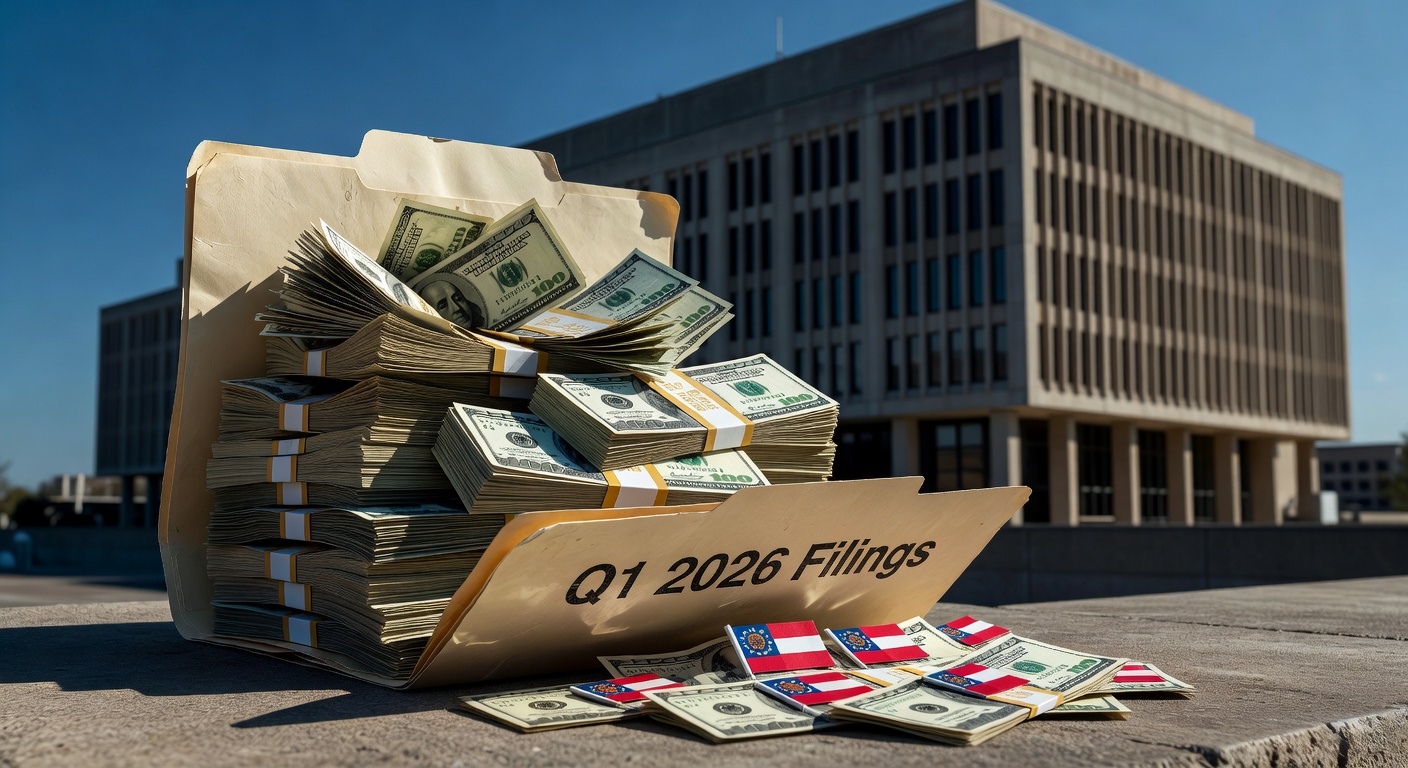
Senator Jon Ossoff raised $14 million in the first quarter of 2026 alone, leaving him with $31 million cash on hand to defend his Georgia Senate seat. Polls show him ahead of top Republican challengers by 3 to 9 points, and prediction markets peg his odds at 83 percent. Republicans face a fractured primary with no standout candidate after Governor Brian Kemp passed on the race.
Ossoff Builds War Chest GOP Can't Match
Ossoff's fundraising haul dwarfs his opponents. His campaign reported the Q1 figure on April 2026 filings, a response to expected super PAC spending from Republicans. GOP candidates lag far behind: Representative Buddy Carter raised under $2 million in the same period, while Mike Collins scraped together $1.5 million, per federal disclosures.
| Candidate | Q1 2026 Raised | Cash on Hand (April) |
|---|---|---|
| Jon Ossoff (D) | $14 million | $31 million |
| Buddy Carter (R) | <$2 million | Not reported |
| Mike Collins (R) | $1.5 million | Not reported |
This advantage lets Ossoff flood airwaves early. Georgia's median household income sits at $71,000, making donor networks key in a state where TV ads decide close races. Ossoff taps national Democrats wary of losing the seat that flipped with his 2021 win.
Viral Moments Lift Ossoff Past Warnock's Shadow
Ossoff once trailed Raphael Warnock's star power. Warnock, reelected in 2022, pastors Ebenezer Baptist Church, once led by Martin Luther King Jr. and Sr. Early on, observers pegged Ossoff as the less charismatic half of Georgia's Democratic duo, per a New Republic profile.
That changed with viral speeches. In February 2026, Ossoff blasted the "Epstein class" of ultra-wealthy elites warping politics. The clip racked up millions of views. He pairs anti-corruption talk with bipartisan wins, like military housing reforms, and attacks on healthcare costs and Trump-era policies. These play well in suburban districts that backed him in 2021.
Democrats now call him a party rock star. His rhetoric resonates beyond Atlanta, pulling independents in a state Trump carried narrowly in 2024.
