
Georgia Lets Candidates Pay for Childcare With Campaign

Georgia Lets Candidates Pay for Childcare With Campaign
Political Editor Savannah Witt
Published May 11, 2026

Three years after Georgia quietly changed the rules to let candidates use campaign donations for childcare, the state's May 19 primary arrives with the same structural reality: 19 mothers with minor children serve in Georgia's 236-member legislature, roughly 8 percent of a body that makes decisions on education, family leave, and child welfare. The permission exists. The pipeline does not.

The Ruling That Changed the Rules

In June 2023, the Georgia Government Transparency and Campaign Finance Commission voted unanimously to allow candidates and officeholders to use campaign funds for childcare and dependent or elder care. The decision came after a bipartisan push from state Reps. Stacey Evans (D-Atlanta) and Beth Camp (R-Concord), who petitioned the commission to bring Georgia in line with federal precedent.

The federal baseline had been set in 2018, when the FEC expanded allowable campaign expenses to cover dependent care. Georgia's ruling aligned the state with 22 others that had already adopted similar rules. Camp, whose own children are now adults, said she found it "odd" that federal candidates had access to the benefit while Georgia candidates did not. "It is not a partisan issue. It is a nonpartisan issue because it impacts everyone," she said.

The commission that approved the change was, notably, all male.

The Numbers Tell a Different Story

Georgia's legislature has 236 members. As of September 2024, 19 of them are mothers with minor children, up from 3.8 percent two years prior but still nowhere near the share of mothers in the general population. Vote Mama Foundation, which tracks these figures nationally, puts the share of state lawmakers who are mothers with children under 18 at roughly 8 percent across all 50 states.

The gap is not accidental. Despite making up half of the population, women hold about 32.8 percent of all statehouse seats nationally, according to the Center for American Women in Politics. Mothers with young children are an even smaller slice of that. Nationally, only about 5 percent of state lawmakers are mothers to children under 18, according to Vote Mama.

The data on who actually uses the childcare benefit is telling. Candidates of color account for 70 percent of total campaign childcare funds reported over a four-year period, and Democratic candidates have overwhelmingly spent the most, with Republicans accounting for just 11 percent of total reported spending, according to Vote Mama's research. Awareness is part of the problem: some attribute limited usage to a lack of education on the policy.
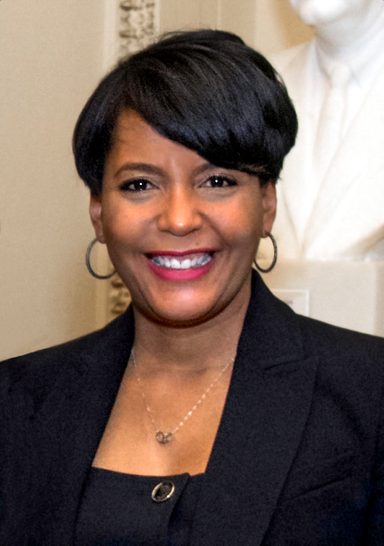
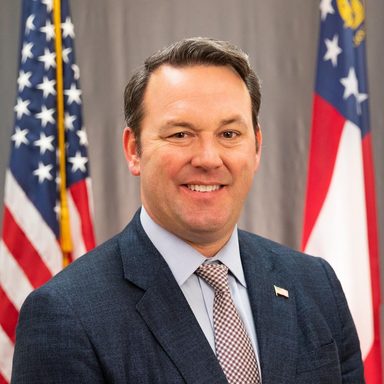
General Election · HEAD TO HEADNov 3, 2026

Georgia Governor

Keisha Lance Bottoms
Keisha Lance BottomsDemocrat52%
Burt JonesRepublican48%
Burt Jones

The Barriers That a Ruling Cannot Fix

Georgia's legislature pays $22,000 a year. It is a part-time job that requires full-time presence during the annual three-month session, often pulling lawmakers hundreds of miles from home. Some lawmakers spend thousands of dollars on childcare expenses during session alone, on a salary that barely covers the cost. Allowing campaign funds to offset those costs during a race is meaningful. It does not solve what happens after election day.

Women make up 34 percent of both chambers of Georgia's legislature but half of the state's population. Women lawmakers with young children remain a rare presence under the Gold Dome, where votes on education funding and family policy are routine. Rep. Camp put it plainly when colleagues questioned why the childcare rule change was even necessary: "We probably would have had more parents enter into elected office if they'd had the opportunity."

The structural barriers extend beyond money. Vote Mama Foundation identifies caregiving demands, cultural pressure, and the absence of family-friendly Capitol amenities as compounding factors that keep mothers from running and, once elected, from staying. The organization's data shows that when candidates are authorized to use campaign funds for caregiving expenses, they do use them, suggesting the policy has real uptake when candidates know it exists.

What the May 19 Primary Reflects

Georgia's primary ballot on May 19 spans legislative races up and down the state, from competitive House districts in the Atlanta suburbs to open Senate seats in rural Georgia. The childcare ruling is now three cycles old, but its reach into actual candidate recruitment is harder to measure. No statewide tracking exists of how many Georgia candidates have used the benefit since 2023.

The broader national picture offers a benchmark. Since 2018, the number of states permitting campaign funds for childcare has grown to 33, with Hawaii among the most recent to adopt the policy. Vote Mama founder Liuba Grechen Shirley has said she expects all 50 states to allow it within five years. Georgia is already there on paper.

Whether the May 19 primary produces a new class of parent-legislators depends less on the ethics commission's 2023 ruling and more on whether candidates with young children decide the math works. The ruling removed one cost. The salary, the commute, and the session calendar remain exactly as they were.

Think you know who's going to win?
Trade on real election outcomes.
Learn More Deposit $20, get $50 to trade.
Powered by
